
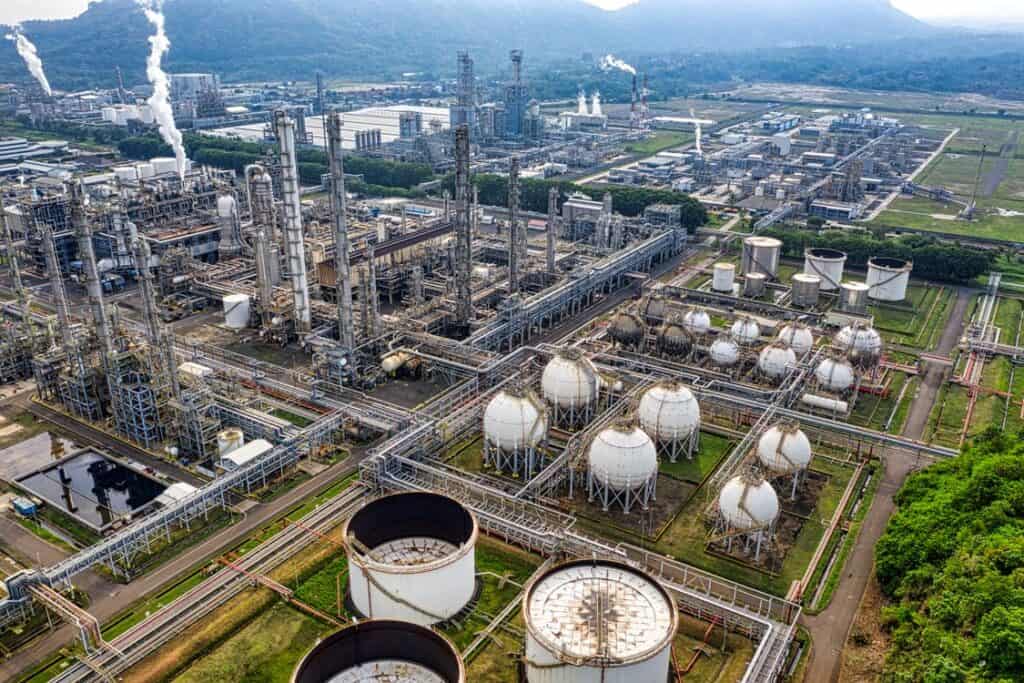
Carbon capture has spent a decade as a slide in climate presentations. It is now becoming steel in the ground, and that shift is quietly pulling on a corner of the plate market that has served refineries and gas plants for generations.
Capturing carbon dioxide, compressing it, and pumping it underground is an exercise in pressure containment. And pressure containment runs on pressure vessel plate.
From slideware to construction
The project pipeline has grown faster than most outside the sector realize. Industry trackers now count well over 600 CCUS projects at various stages, with momentum building toward broad commercial deployment.
Not all will be built, and the sector has had its share of cancellations and resets. But the direction is clear, and the projects that do advance are heavy industrial builds.
A capture facility bolts onto a power plant, cement kiln, ethanol plant, or refinery and strips CO2 out of the flue gas. That process needs absorber columns, regenerators, separators, and a string of vessels operating under pressure.
Downstream of capture sits compression, where the gas is squeezed to a dense phase for pipeline transport and injection. More vessels, more knockout drums, more plate.
Why the workhorse pressure vessel grade fits
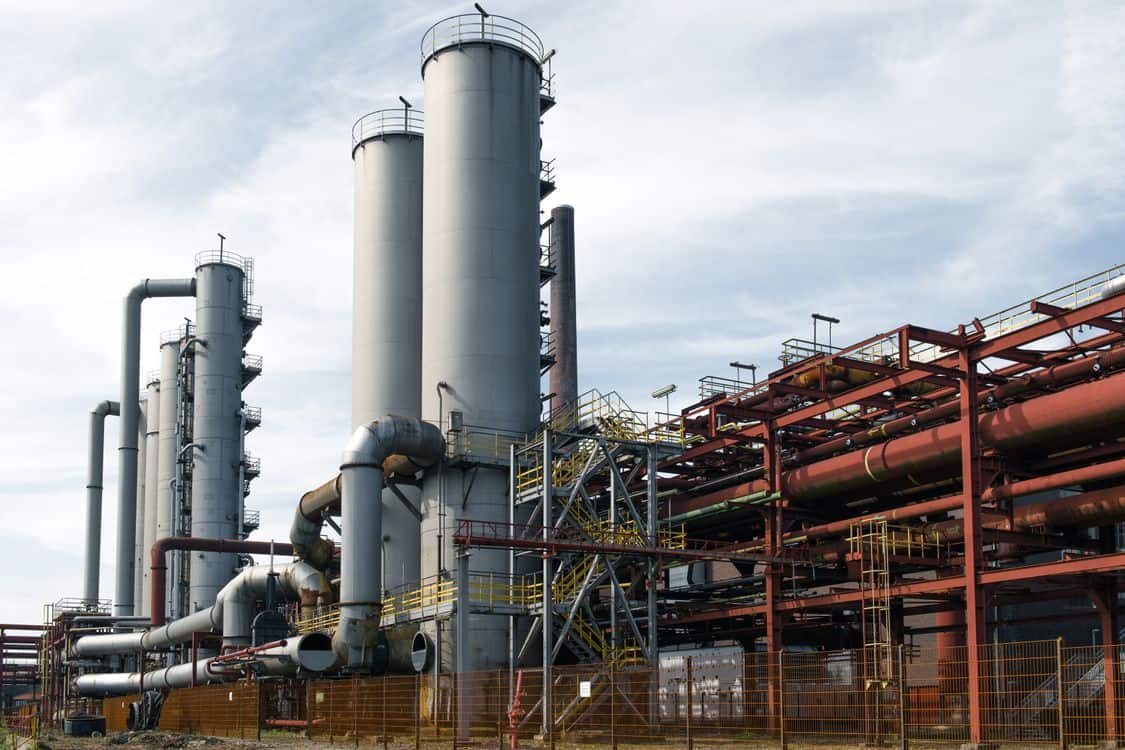
The interesting thing about carbon capture is how ordinary much of the steel is. This is not, for the most part, exotic-alloy territory. It is moderate-temperature, moderate-pressure carbon steel duty.
That puts it squarely in the lane of the most widely specified pressure vessel plate on the market. A grade like ASTM A516 covers carbon steel plate for moderate and lower-temperature pressure vessel service, and it is the default choice for exactly this kind of equipment.
There is a wrinkle worth flagging. Wet CO2 can be corrosive, and streams that carry impurities can push equipment toward sour-service concerns, where resistance to hydrogen-induced cracking matters.
That does not push designers away from the workhorse grade so much as toward the cleaner, better-controlled versions of it. Normalized plate, tight chemistry, and where needed, supplementary testing for cracking resistance, all keep the same base material fit for the duty.
The result is that a carbon capture train looks, from a plate-buying perspective, a lot like a conventional gas-processing project. The familiar pressure vessel grade does most of the heavy lifting.
What this means for the plate market
For plate suppliers and fabricators, carbon capture is shaping up as a steady incremental demand source rather than a sudden boom.
The economics are policy-sensitive, which makes the pipeline lumpy. Tax credits, grant programs, and offtake agreements can move whole tranches of projects forward or stall them, and that volatility flows straight into procurement timing.
The smart read is to watch which projects have reached financial close and secured their CO2 transport and storage arrangements. Those are the ones that will actually order steel, and they tend to cluster near existing industrial corridors.
There is also a quality angle that rewards attention. CO2 service blurs the line between standard and sour duty, so getting the specification right, including any cracking-resistance requirements, matters more here than on a textbook moderate-pressure vessel.
Carbon capture may never move plate volumes the way refining or LNG does. But it is becoming a real, recurring call on conventional pressure vessel steel, and it is doing so using a grade the industry has trusted for decades.
