
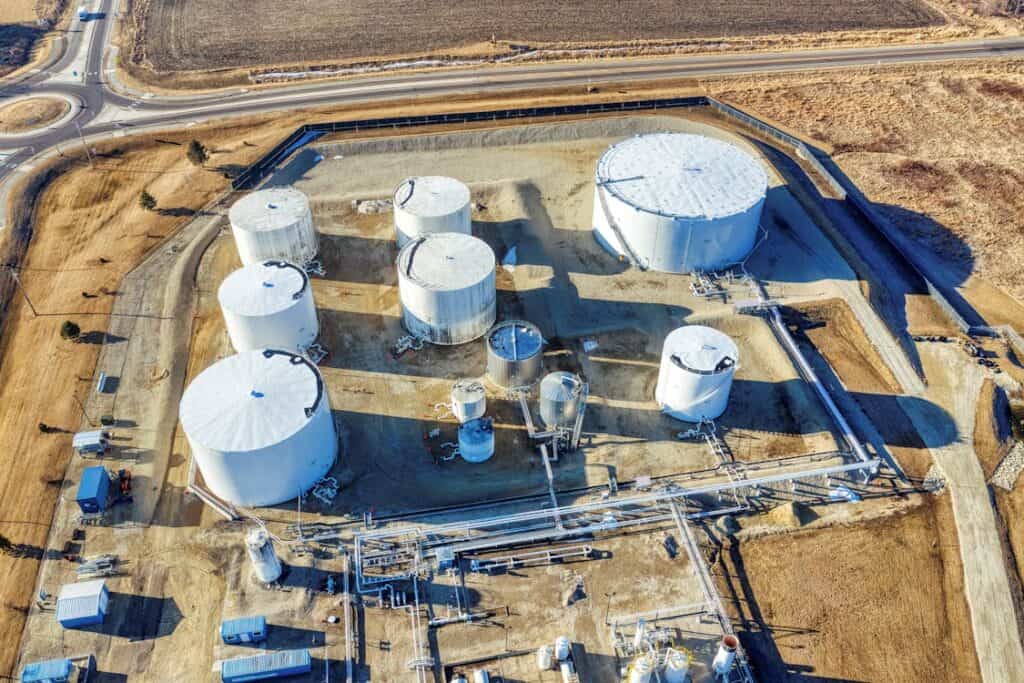
API 620 sets out engineering rules for large welded low pressure storage tanks that hold liquids such as liquefied gases and volatile hydrocarbons. Engineers and plant owners rely on the standard when tanks must operate below specific pressure thresholds while meeting safety and service demands.
The document establishes expectations for material choice, welding practice, testing and inspection so that tanks will perform over long operating lives.
Design Code And Scope
API 620 defines the code that governs design for low pressure storage tanks with welded shells and roofs built to store liquefied gases at ambient or near ambient temperatures, and it finds use in refineries, gas plants and chemical facilities. The document sets limits on maximum allowable pressure and provides guidance on different tank configurations, roof styles and interactions with foundations that influence stability and load transfer.
The scope applies to tanks up to specified dimensions and pressure limits, thus designers must confirm that a project falls inside the code before applying its methods and calculations. Verifying applicability early saves time on redesign and reduces the chance of costly rework when regulatory or functional gaps appear.
Materials And Construction
Material selection under API 620 centers on steels that combine adequate toughness, good weldability and resistance to the stored fluid at expected service temperatures, and choices often reflect trade offs between cost and performance. Plate and piping grades are selected to meet yield strength and tensile requirements while allowing controlled heat input during welding so the metallurgical structure remains acceptable in service.
Fabrication emphasizes proven welding procedures, qualified craftsmen and documented thermal treatments where needed to achieve the specified mechanical properties and to avoid brittle zones. Clear mill test reports, traceable certificates and records of material handling complete the chain of evidence that owners and inspectors will review.
Pressure And Temperature Limits
The code is tailored for tanks intended to see only modest positive pressures above atmospheric, with numerical limits that separate API 620 from standards for higher pressure vessels and tanks. Temperature boundaries play a strong role in material choice and in the range of tests that must be performed, as mechanical properties like toughness and ductility can change at low temperatures and under cyclic thermal swings.
API 620 provides equations, charts and safety factors to compute allowable stresses and to determine minimum thicknesses that satisfy both pressure and temperature demands. Following those rules reduces the risk of brittle fracture, localized overstress and unexpected deformation when the tank is placed into service.
Welded Fabrication And Quality Control
Welding is central to API 620 tank integrity because the shell, roof and attachments must remain leak free under load, thermal movement and occasional upset events, so procedural rigor matters. The code recognizes prequalified procedures for straightforward joints and calls for formal procedure qualification tests for complex welds or low temperature applications that demand tighter control of metallurgy.
Non destructive examinations such as radiography, ultrasonic testing and magnetic particle inspection are specified at defined coverage levels to reveal defects that could grow under fatigue or corrosion. Records of weld maps, inspector findings and repair actions form the audit trail that demonstrates compliance and supports safe long term operations.
Inspection And Testing Requirements
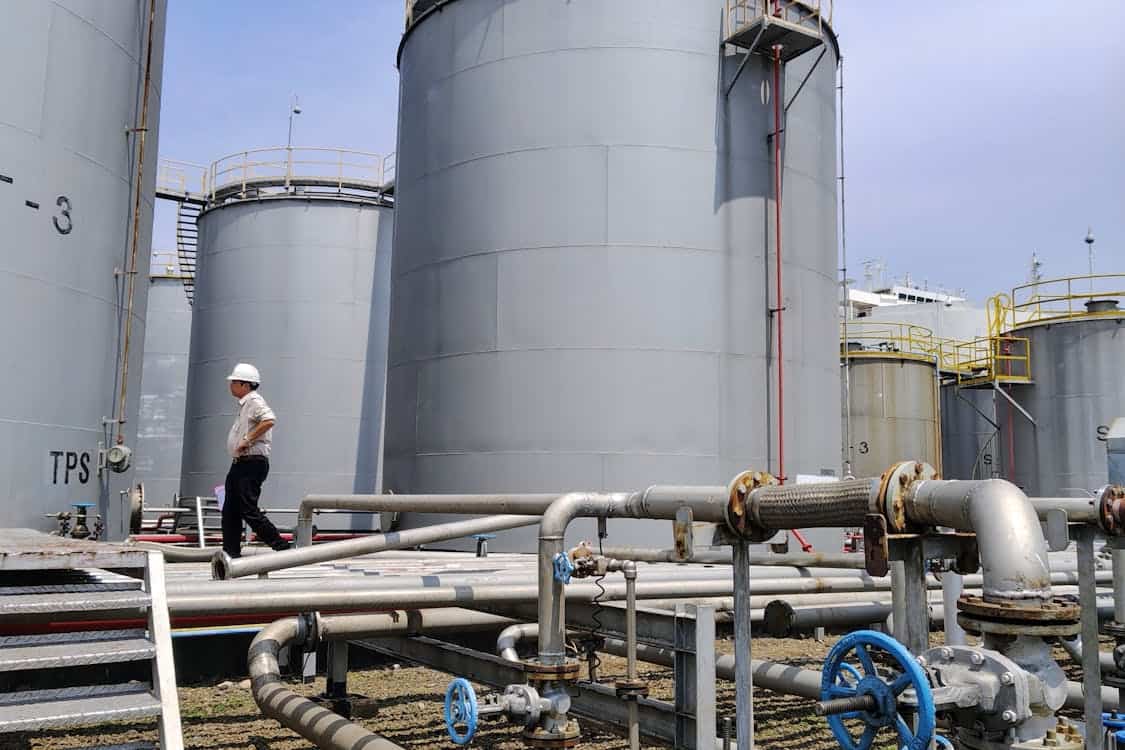
API 620 prescribes hydrostatic testing, leak tightness verification and staged inspections that together confirm the tank will hold its design contents without undue deformation or loss of containment. Filling to the required test head gives a physical trial of shell strength while focused leak tests check critical joints and fittings for tightness under realistic conditions.
Inspections are scheduled at key milestones, for example after erection, after major welding sequences and after installation of nozzles and instrumentation, so issues can be caught when repairs are manageable. Acceptance criteria are stated in measurable terms for thickness, weld quality and pressure holding capacity, thus subjective calls are reduced and owners obtain clearer evidence of readiness.
Corrosion Allowances And Protection
API 620 accounts for the fact that many fluids and surrounding conditions will attack metal over time, and it builds in corrosion allowance and options for protective linings or coatings to extend service life. External exposure from soil or atmosphere and internal attack related to fluid chemistry influence material choice, lining type and the need for monitoring systems that track loss of metal.
For buried items cathodic protection is often employed while above ground shells receive specified coatings with defined surface preparation and application standards. Routine thickness surveys and corrosion monitoring programs are common practice so repairs can be planned before leaks develop and downtime is kept to a minimum.
Safety Features And Relief Systems
Safety provisions in API 620 include requirements for relief devices, vents and overpressure protection that are sized to handle foreseeable scenarios, including fire exposure and operational upsets. Relief equipment must be compatible with the stored product and must vent to a safe location or to control systems that manage emissions and mitigate hazards.
Instrumentation for pressure, temperature and level gives operators the early warning needed to act when a trend moves away from normal operating windows, which often allows a small issue to be fixed before it grows. Access for inspection and maintenance is also specified so people can work with lower risk using platforms, ladders and manways laid out for safe tasks.
Installation And Site Factors
A reliable tank begins with a foundation that can support the dead weight plus the live load of the fluid without uneven settlement that would induce stress concentrations in the shell or nozzles. Early site work includes soil characterization, drainage planning and attention to frost depth and groundwater so the foundation and anchorage remain effective for decades.
Layout choices for piping, road access for maintenance and safe fill and vent routes influence operability and maintenance cost in ways that often outlast first cost savings. Coordination with local permitting bodies, alignment with other site infrastructure and integration of emergency plans must match the expectations of API 620 so that the installed tank performs as intended.
